The Churches of Old Nessebar: A Complete Visitor Guide
Walking through the narrow streets of Old Nessebar, visitors quickly discover that churches are more than historical monuments here. They define the skyline, shape the character of the town, and tell the story of the civilizations that once flourished on this small peninsula.
Whether you are interested in history, architecture, photography, or UNESCO heritage, the churches of Nessebar are among the most rewarding places to explore.
Why Are the Churches of Nessebar So Important?
The churches of Old Nessebar represent centuries of cultural and religious development.
Built during different historical periods, they showcase influences from Byzantine, medieval Bulgarian, and Eastern Orthodox traditions. Together, they form one of the main reasons why Old Nessebar was recognized as a UNESCO World Heritage Site.
Many visitors are surprised by the concentration of churches within such a small area. In a relatively short walk, you can encounter some of the most significant medieval religious monuments in Bulgaria.
Church of Saint Sophia
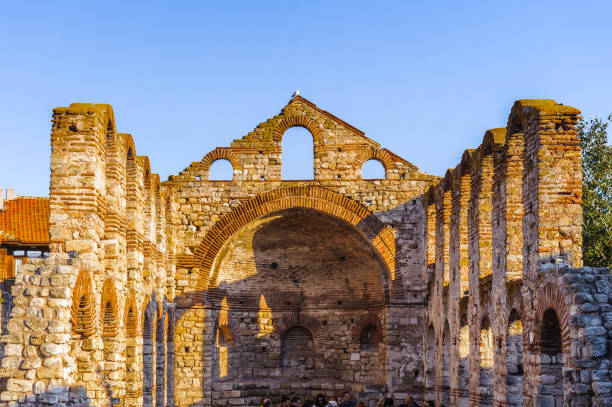
The Church of Saint Sophia is one of the most iconic landmarks in Old Nessebar.
Often referred to as the Old Metropolitan Church, it dates back to the 5th century and remains one of the largest religious structures on the peninsula.
Although only parts of the building survive today, its impressive arches and open-air ruins create one of the most memorable sights in the town.
For many visitors, Saint Sophia is the first church they associate with Nessebar.
Church of Christ Pantocrator
Among all the churches in Old Nessebar, the Church of Christ Pantocrator is arguably the most photographed.
Built during the 13th and 14th centuries, it is famous for its decorative brickwork, colorful façade patterns, and elegant proportions.
The church is considered one of the finest examples of medieval Bulgarian architecture and remains one of the most recognizable symbols of the Old Town.
Its central location also makes it a natural stop on almost every walking route through Nessebar.
Church of Saint John the Baptist
The Church of Saint John the Baptist offers a striking contrast to some of the more decorative churches in the town.
Constructed primarily from stone, it features a simpler architectural style while maintaining a powerful historical presence.
Its well-preserved structure provides visitors with valuable insight into the religious architecture of medieval Nessebar.
Church of Saint Stephen
The Church of Saint Stephen is particularly famous for its interior frescoes.
Inside, visitors can admire hundreds of detailed wall paintings that cover different periods of religious art and storytelling.
For travelers interested in sacred art and historical preservation, Saint Stephen is often one of the highlights of a visit to Old Nessebar.
Church of the Holy Archangels Michael and Gabriel
Although partially preserved, this church remains one of the most beautiful architectural monuments in the Old Town.
Its decorative façade demonstrates the artistic sophistication of medieval Nessebar and offers excellent opportunities for photography.
The church also helps illustrate why Nessebar became one of the most important religious centers on the Black Sea coast.
Walking Between the Churches
One of the best aspects of exploring the churches of Old Nessebar is how easily they can be visited on foot.
The compact layout of the peninsula allows visitors to move naturally between major landmarks while discovering hidden streets, traditional houses, and panoramic sea views along the way.
Many travelers choose to spend several hours simply walking through the Old Town and stopping at churches whenever they encounter them.
This relaxed approach often provides a more rewarding experience than following a strict sightseeing schedule.
Beyond the Churches: Understanding Local Culture
While the churches are the most important historical landmarks in Nessebar, they are only part of the town’s cultural identity.
The Old Town also preserves local traditions, architecture, cuisine, and wine culture.
After visiting several churches, many travelers enjoy taking a break in one of the atmospheric corners of the Old Town. One of the most distinctive stops is Chasovnika Winery, located within the historic clock tower setting.
Its stone cellar atmosphere offers a different perspective on local heritage and provides visitors with an opportunity to experience Bulgarian wine culture in a setting that feels connected to the history of the town. For travelers interested in culture rather than simply sightseeing, it serves as a natural complement to a day spent exploring Nessebar’s religious monuments.
Which Church Should You Visit First?
If you only have a short time in Old Nessebar, start with:
- Church of Saint Sophia for history and atmosphere
- Church of Christ Pantocrator for architecture and photography
- Church of Saint Stephen for frescoes and religious art
- Church of Saint John the Baptist for historical preservation
Together, these churches provide an excellent introduction to the cultural and architectural heritage of the town.
Why the Churches Define Old Nessebar
The churches of Old Nessebar are more than individual monuments. Together, they tell the story of a town that served as a religious, cultural, and commercial center for centuries.
Their preservation is one of the primary reasons why Nessebar remains one of Bulgaria’s most important UNESCO destinations.
For visitors, exploring these churches is not simply about seeing historic buildings. It is about understanding how different civilizations, traditions, and artistic influences shaped one of the most remarkable towns on the Black Sea coast.